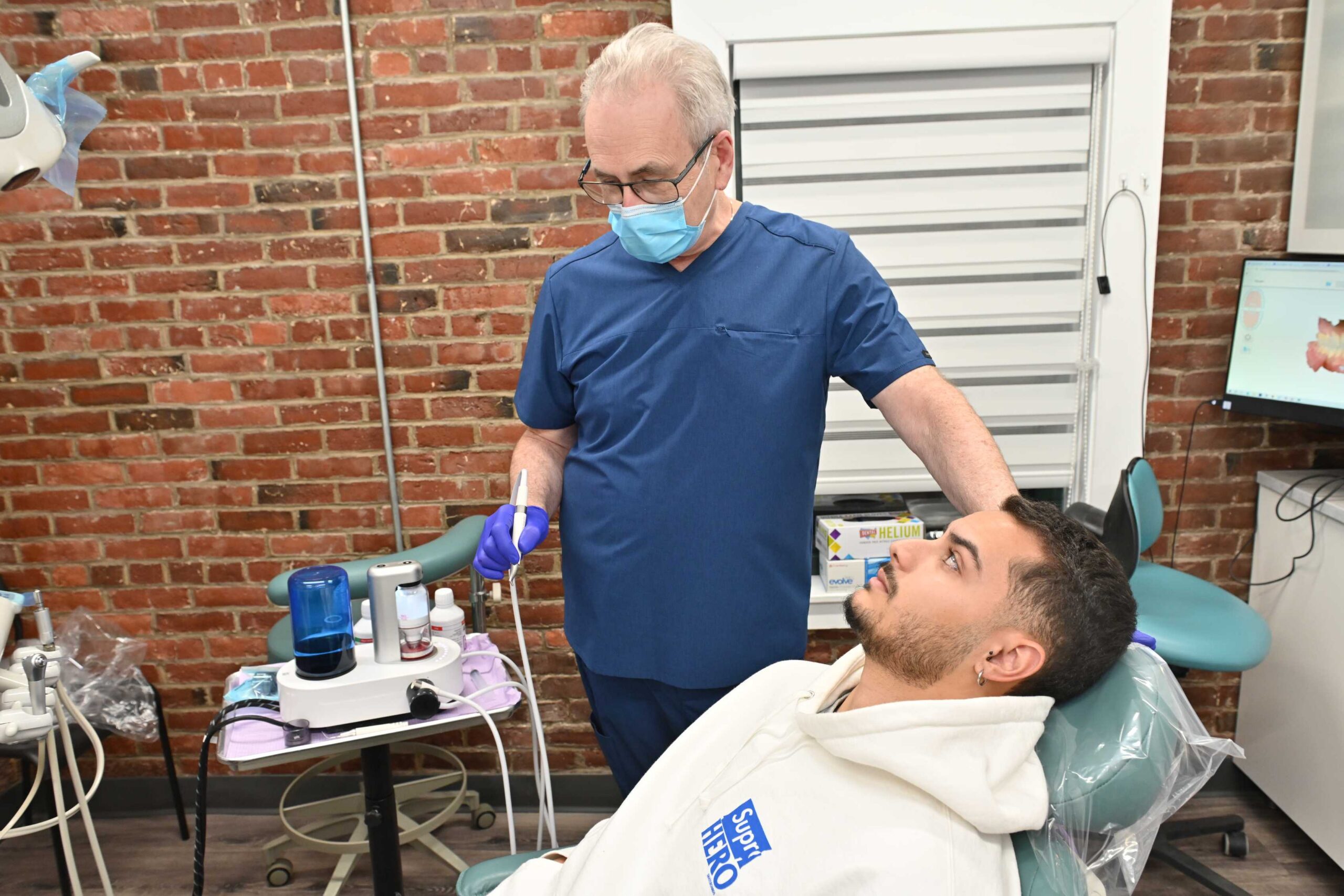
AirFlow teeth cleaning is not just for removing stains. This modern air-polishing technology uses a controlled stream of air, water, and fine powder to remove bacterial biofilm and certain surface stains from teeth. It can make professional dental hygiene more comfortable, but it does not replace every part of a traditional cleaning.
If you’ve heard that AirFlow is simply a way to remove coffee or tea stains, you’re missing one of its most important benefits: biofilm removal.
At A Plus Dentistry in Brookline, MA, we believe that understanding modern dental hygiene technology can help you make informed decisions about your preventive dental care.
What Is AirFlow® Teeth Cleaning?
AirFlow teeth cleaning is a professional dental hygiene technique that uses air-polishing technology to remove soft deposits and surface discoloration.
Unlike conventional polishing with a rotating rubber cup and polishing paste, AirFlow directs a controlled mixture of air, water, and specially formulated powder toward the tooth surfaces.
Depending on the system, powder, and clinical indication, air-polishing may be used to clean:
- Natural tooth surfaces
- Hard-to-reach areas between teeth
- Certain areas around orthodontic appliances
- Selected dental restorations
- Appropriate areas around dental implants
Low-abrasive powders, such as erythritol or glycine, are commonly used in modern biofilm-management protocols.
The goal is not simply to make teeth look cleaner. It’s to help remove bacterial deposits that contribute to oral health problems.
What Is Dental Biofilm, and Why Does It Matter?
Dental biofilm is a structured community of microorganisms that develops on tooth surfaces and other structures inside the mouth.
You probably know it by a more familiar name: dental plaque.
Biofilm forms continuously, even when your teeth look clean. When it accumulates, bacteria within the plaque can contribute to tooth decay and inflammation of the gums.
Why Biofilm Removal Matters
Removing biofilm is an important part of preventive dental care because it helps control bacterial deposits associated with:
- Cavities
- Gingivitis
- Gum inflammation and bleeding
- Periodontal disease
- Plaque accumulation around dental restorations
Brushing twice daily with fluoride toothpaste and cleaning between your teeth remain essential. However, some areas can be difficult to clean thoroughly at home.
Professional dental hygiene appointments allow your dental team to assess plaque accumulation, remove deposits, and recommend improvements to your daily routine.
How AirFlow Helps Remove Biofilm
AirFlow uses a stream of air, water, and fine powder particles to disrupt and remove soft bacterial deposits.
This technique can be especially useful around certain hard-to-reach surfaces where conventional polishing may be less convenient.
A 2023 systematic review published in the Journal of Clinical Medicine found that air-polishing with appropriate powders can effectively support dental biofilm removal during periodontal care. The researchers also highlighted its potential to improve patient comfort when used as part of professional treatment.
AirFlow is therefore more than a cosmetic polishing method: it can be a useful component of professional biofilm management.
Does AirFlow® Teeth Cleaning Remove Stains?
Yes. AirFlow can effectively remove many external tooth stains, including discoloration associated with everyday habits.
Common sources of surface stains include:
- Coffee and tea
- Red wine
- Tobacco
- Certain strongly colored foods and beverages
These stains accumulate on the outside of teeth and may become more noticeable over time.
AirFlow helps remove surface deposits and discoloration without relying solely on conventional polishing paste.
Does AirFlow Whiten Your Teeth?
Not in the same way as professional teeth whitening.
AirFlow removes certain external stains, which may reveal more of your teeth’s natural color and make your smile appear brighter.
However, it does not chemically bleach teeth or change their underlying shade.
If you’re concerned about deeper discoloration, your dentist can help determine whether professional whitening or another cosmetic treatment would be more appropriate.
Is AirFlow® Cleaning More Comfortable Than Traditional Cleaning?
For many patients, comfort is one of the most appealing aspects of modern air-polishing technology.
Traditional professional cleaning may involve ultrasonic instruments, hand scalers, and rotating polishing tools. These methods remain important, particularly for removing hardened deposits.
AirFlow uses a different approach for soft biofilm and stain removal.
Potential Comfort Benefits
Depending on the patient’s needs and the cleaning technique, AirFlow may offer:
- Less reliance on rotating polishing instruments
- Efficient removal of soft deposits
- Access to certain difficult-to-clean areas
- A potentially more comfortable hygiene experience
- A smoother-feeling tooth surface after cleaning
A 2023 systematic review published in the International Journal of Dental Hygiene found that air-polishing and conventional periodontal maintenance techniques achieved comparable clinical results, while air-polishing was associated with better patient-reported comfort and other favorable patient-related outcomes.
However, comfort varies from person to person. Some patients may notice the water spray, powder sensation, or sensitivity around exposed tooth surfaces.
AirFlow should not be described as completely painless or suitable for every patient.
AirFlow® vs Traditional Teeth Cleaning: What’s the Difference?
The biggest difference is what each technique is designed to remove.
Feature | AirFlow® Cleaning | Conventional Cleaning |
Main function | Soft biofilm and surface stain removal | Plaque, calculus removal, and polishing |
Technology | Air, water, and fine powder | Hand instruments, ultrasonic scalers, and polishing tools |
Hardened tartar | Not the primary method | Scaling instruments remove calculus |
Patient comfort | May be more comfortable for some patients | Varies by technique and individual sensitivity |
Role in dental hygiene | Part of a professional cleaning protocol | Essential elements of comprehensive professional care |
Can AirFlow Replace Scaling?
No, not when hardened tartar is present.
Dental calculus, commonly called tartar, is mineralized plaque that cannot be removed through normal brushing. Unlike AirFlow, which primarily targets soft bacterial biofilm and surface stains, ultrasonic and hand scaling instruments are designed to remove hardened deposits.
A systematic review published in Medicina found that erythritol air-polishing did not consistently produce superior periodontal outcomes compared with conventional non-surgical treatments. This highlights why professional dental cleaning should be tailored to each patient’s needs rather than relying on a single technique.
AirFlow and traditional scaling can complement each other as part of a comprehensive professional cleaning, depending on your oral health and hygiene needs.
How Does AirFlow Fit Into Professional Dental Hygiene Care?
AirFlow works best when viewed as one part of a broader preventive care strategy.
A comprehensive dental hygiene visit may include several steps.
1. Dental Examination and Assessment
Your dental team evaluates your teeth, gums, existing restorations, and oral hygiene needs.
The assessment helps determine whether you need routine preventive cleaning, additional scaling, or periodontal treatment.
2. Biofilm and Stain Removal
When appropriate, AirFlow can help remove soft bacterial deposits and external stains.
Some hygiene protocols use a disclosing solution to make plaque more visible before cleaning. This can help identify areas that need attention.
3. Scaling When Necessary
If hardened tartar is present, your hygienist may use ultrasonic or hand instruments to remove it.
Patients with periodontal disease may require additional treatment beyond routine preventive cleaning.
4. Personalized Home-Care Recommendations
Your dental team may recommend improvements to brushing, flossing, interdental cleaning, or other hygiene habits.
Professional cleaning is most effective as part of consistent preventive care, not as a replacement for daily oral hygiene.
Regular dental exams and professional cleanings at A Plus Dentistry help identify plaque buildup, monitor gum health, and determine which hygiene treatments are appropriate for your smile.
Who May Benefit From AirFlow® Teeth Cleaning?
AirFlow may be considered for patients who want effective removal of soft biofilm and surface stains as part of professional hygiene care.
It may be especially relevant for people who:
- Frequently drink coffee or tea
- Experience noticeable surface staining
- Have plaque accumulation in difficult-to-clean areas
- Wear certain orthodontic appliances
- Prefer an alternative to conventional polishing
- Need ongoing professional biofilm management
Air-polishing may also have applications in periodontal maintenance and selected implant-care situations when appropriate powders and techniques are used.
However, not everyone is automatically a candidate.
Your dental professional should consider your medical history, respiratory conditions, oral tissues, restorations, and the equipment being used before recommending treatment.
Frequently Asked Questions About AirFlow® Teeth Cleaning
Is AirFlow teeth cleaning only for stains?
No. AirFlow removes soft bacterial biofilm as well as certain external tooth stains. Biofilm management is an important reason this technology may be included in professional dental hygiene care.
Does AirFlow remove tartar?
AirFlow is not the primary method for removing hardened tartar. If calculus is present, your hygienist may use ultrasonic or hand scaling instruments alongside air-polishing.
Is AirFlow teeth cleaning painful?
Many patients find air-polishing comfortable, and research suggests it may cause less discomfort than certain conventional periodontal cleaning techniques. However, individual experiences vary, especially for patients with sensitive teeth or gums.
Is AirFlow the same as teeth whitening?
No. AirFlow removes surface stains and deposits, which may make teeth appear cleaner and brighter. Professional whitening uses bleaching agents to change the color of teeth.
How often should you get AirFlow teeth cleaning?
There is no single schedule appropriate for everyone. Your dentist or hygienist can recommend a cleaning interval based on your gum health, plaque accumulation, medical history, and individual risk factors.
Experience a Cleaner, Healthier Smile at A Plus Dentistry
AirFlow® teeth cleaning is about more than removing stains—it’s about supporting healthier teeth and gums through effective biofilm management. Wondering if this advanced cleaning method is right for you? Contact A Plus Dentistry in Brookline, MA, to discuss your dental hygiene needs.
 (617) 264-9200
 320 Washington Street, Brookline, MA 02445
Don’t wait until plaque buildup or gum problems affect your smile. Schedule your dental exam today to discuss your hygiene needs, explore modern cleaning options, and find out whether AirFlow® is right for you.