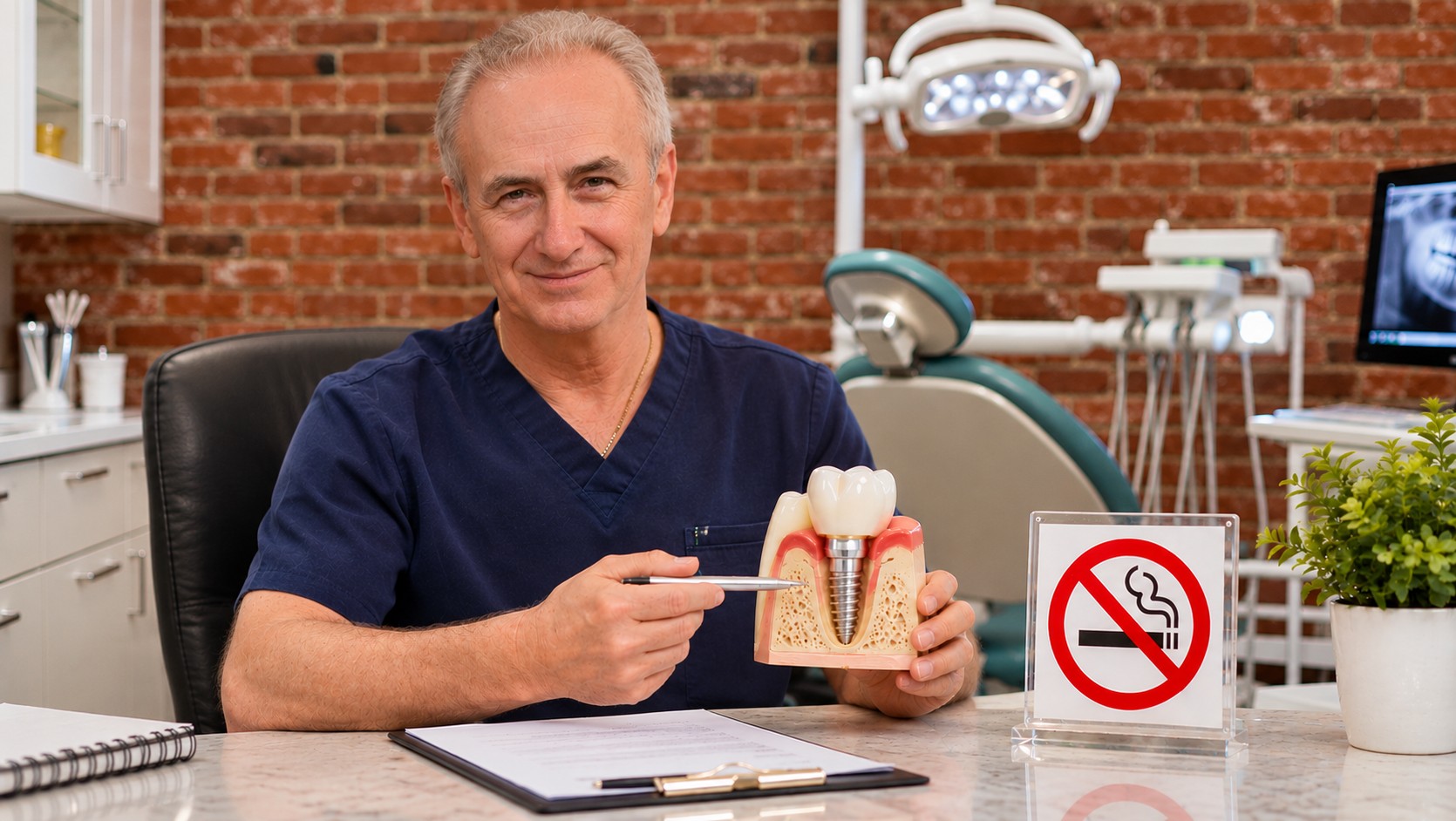
Yes, smoking can increase the risk of dental implant failure and complications. A 2024 systematic review and meta-analysis found that smoking was significantly associated with a higher risk of early dental implant failure compared with non-smokers. Smoking has also been linked with peri-implant disease, postoperative infection, and marginal bone loss. However, smoking does not automatically mean that dental implant treatment will fail.
If you smoke and are considering dental implants, understanding the risks - and discussing smoking cessation with your dentist - can help you make a more informed decision about treatment.
At A Plus Dentistry in Brookline, MA, implant planning considers your oral health, bone condition, medical history, lifestyle habits, and other factors that may affect healing and long-term success.
Why Smoking and Dental Implants Can Be a Risky Combination
A dental implant is a titanium or similar biocompatible post placed in the jawbone to replace a missing tooth root. After placement, the surrounding bone needs time to heal and form a stable connection with the implant.
This process is called osseointegration.
Successful healing depends on healthy tissues, adequate blood supply, good oral hygiene, and appropriate postoperative care. Smoking can interfere with several of these factors by affecting circulation, tissue oxygenation, and the body's normal healing response.
Because the early healing period is critical for implant stability, tobacco use can make osseointegration less predictable and may increase the risk of complications.
That does not mean every smoker will lose an implant. It means smoking is an important modifiable risk factor that should be considered during treatment planning.
How Smoking Can Affect Dental Implant Healing
The first weeks and months after implant placement are especially important because the surgical site must heal while the implant becomes integrated with the jawbone.
Smoking is associated with changes in circulation, tissue oxygenation, inflammatory responses, and immune function. These effects may make it more difficult for tissues to recover predictably after surgery.
For dental implant patients, compromised healing may affect:
- Gum tissue recovery
- Bone healing around the implant
- Implant stability during osseointegration
- The body's response to bacterial challenges
- Long-term tissue health surrounding the implant
Because early healing plays such an important role in implant stability, reducing avoidable risk factors during this period matters.
Does Smoking Increase Dental Implant Failure Risk?
Yes. Research consistently shows an association between smoking and increased dental implant failure.
The 2024 meta-analysis mentioned earlier found that smokers had greater odds of early implant failure than non-smokers, with the association particularly notable for implants placed in the upper jaw.
Longer-term evidence points in the same direction. A 2026 systematic review found significantly reduced implant survival in cigarette smokers compared with non-smokers. The review also reported greater peri-implant crestal bone loss, while most included studies found a higher incidence of peri-implantitis among smokers.
Together, these findings suggest that smoking can affect both the early healing stage and the long-term health of dental implants.
What Does Implant Failure Mean?
Implant failure can occur at different stages.
Early implant failure happens before the implant has fully integrated with the surrounding bone or before the final restoration is functioning normally.
Late implant failure can occur after an implant has been in use for a longer period and may be associated with inflammation, bone loss, excessive forces, or other complications.
Smoking may influence both early healing and the long-term health of the tissues surrounding an implant.
Smoking, Infection Risk, and Peri-Implantitis
One of the most important concerns with smoking and dental implants is the health of the gum and bone surrounding the implant after treatment.
Dental implants cannot develop cavities, but the surrounding tissues can still develop inflammatory disease.
What Is Peri-Implantitis?
Peri-implantitis is an inflammatory condition affecting the tissues around a dental implant. It is associated with progressive loss of supporting bone and can threaten implant stability if it progresses.
A 2025 AO/AAP systematic review and meta-analysis identified smoking as a significant risk indicator for peri-implantitis. The joint American Academy of Periodontology and Academy of Osseointegration consensus report also lists smoking among the key behavioral risk factors for peri-implant diseases.
Good oral hygiene and professional maintenance therefore remain critical long after implant surgery is complete.
Can Smokers Still Get Dental Implants?
Yes, smoking does not automatically prevent someone from receiving dental implants.
Current evidence generally considers tobacco smoking a risk factor rather than an absolute contraindication to implant therapy. However, smoking can negatively affect peri-implant tissues and increase the likelihood of complications.
Your dentist will evaluate your overall risk rather than looking at smoking in isolation.
Important factors may include:
- How much and how often you smoke
- Gum and periodontal health
- Available jawbone
- Oral hygiene
- Medical conditions
- History of gum disease
- Location of the planned implant
- Ability to attend regular maintenance visits
For example, someone who smokes heavily, has active periodontal disease, and struggles with plaque control may have a different risk profile from a patient with healthy gums who is actively working toward smoking cessation.
Why Smoking Cessation Matters Before and After Implant Treatment
Stopping smoking is one of the most important modifiable steps a smoker can discuss with their healthcare providers when preparing for implant treatment.
Quitting can remove continued tobacco exposure during a period when the tissues need the best possible environment for healing.
From an implant perspective, the goal is to reduce factors that may interfere with healing, increase inflammation, or compromise the tissues surrounding the implant.
When Should You Stop Smoking Before Dental Implants?
There is no single cessation timeline that guarantees implant success for every patient.
The appropriate plan may depend on your smoking history, medical condition, surgical procedure, and treatment complexity.
Rather than choosing an arbitrary number of days, tell your dentist honestly how much you smoke and discuss an appropriate cessation strategy before surgery.
Your dentist may also recommend working with your physician or a smoking-cessation program for additional support.
What About Smoking After Dental Implant Surgery?
Smoking during the healing period is particularly concerning because the implant site is recovering from surgery and beginning the process of osseointegration.
If you have undergone implant surgery, follow your dentist's postoperative instructions carefully and avoid restarting tobacco simply because the area begins to feel better.
Healing continues below the surface even after initial swelling or discomfort has improved.
How to Improve Your Chances of Dental Implant Success
Smoking is only one factor affecting implant outcomes. Patients can support implant health by taking a broader preventive approach.
Before Implant Placement
Your dental team may recommend:
- Treating active gum disease
- Improving plaque control
- Reviewing your medical history and medications
- Evaluating bone quantity and quality
- Discussing tobacco use honestly
- Creating a smoking-cessation plan
- Addressing active dental infections
After Implant Placement
Follow postoperative instructions carefully and:
- Keep the surgical area clean as directed
- Avoid smoking according to your care team's recommendations
- Take medications exactly as instructed
- Attend follow-up appointments
- Report unusual pain, swelling, drainage, or implant movement
- Maintain excellent daily oral hygiene
Long-Term Implant Care
An implant still requires ongoing care after it has healed.
Brush thoroughly, clean around the implant as recommended, and maintain regular professional dental visits.
Long-term supportive maintenance is important for protecting the gums and bone around dental implants.
Smoking and Dental Implants: What Should You Tell Your Dentist?
Be straightforward about tobacco use.
Some patients hesitate to mention how much they smoke because they worry they will automatically be told they cannot receive implants. However, accurate information allows your dentist to assess risk and create a safer, more realistic treatment plan.
Tell your dentist:
- Whether you currently smoke
- Approximately how much you smoke
- How long you have smoked
- Whether you vape or use other nicotine products
- Whether you are trying to quit
- Whether you have had previous problems healing after dental surgery
This conversation is about improving treatment planning, not judging your lifestyle.
Frequently Asked Questions About Smoking and Dental Implants
Does smoking cause dental implants to fail?
Smoking does not guarantee implant failure, but research shows that smokers have a higher risk of implant failure compared with non-smokers. Smoking may affect healing, osseointegration, peri-implant tissues, and long-term implant survival.
Can I get dental implants if I smoke?
Yes. Smoking is generally considered a risk factor rather than an absolute contraindication. Your dentist will evaluate your oral health, bone condition, smoking history, and other risk factors before recommending treatment.
Does smoking increase infection risk around dental implants?
Smoking is associated with poorer tissue health and a higher risk of peri-implant disease, including peri-implantitis. Good plaque control, professional maintenance, and smoking cessation can be important parts of reducing risk.
Is vaping safer than smoking after dental implant surgery?
Evidence about vaping and implant outcomes is still developing, so vaping should not automatically be considered harmless for implant healing. Tell your dentist about cigarettes, vaping, and other nicotine or tobacco products before treatment.
Why should I quit smoking before getting a dental implant?
Smoking cessation removes an important modifiable risk factor during implant healing. It may help create a more favorable environment for tissue recovery and long-term implant health.
Protect Your Implant Investment With the Right Plan
Smoking can increase the risk of complications, but it does not automatically mean dental implants are out of reach. The most important step is getting a personalized evaluation and understanding how your oral health, bone condition, and smoking habits may affect treatment.
At A Plus Dentistry in Brookline, MA, we can assess your implant needs, discuss potential risk factors, and help you plan for the best possible long-term outcome.
If you are considering dental implants, don’t wait until missing teeth or bone loss become more difficult to manage.
📞 (617) 264-9200
📍 320 Washington Street, Brookline, MA 02445
Schedule your dental implant consultation at A Plus Dentistry and take the first step toward a healthier, more confident smile.