Existing dental work doesn't automatically prevent you from straightening your teeth, but it can affect treatment planning. Invisalign with crowns, veneers, or implants requires a personalized approach based on your restorations, tooth movement, and bite.
Crowns and veneers are placed on natural teeth, which can often still be moved orthodontically. Dental implants are different because they are anchored in the jawbone and remain fixed.
At A Plus Dentistry in Brookline, MA, we evaluate your existing dental work, tooth alignment, bite, and smile goals to determine whether Invisalign is right for you and create a treatment plan tailored to your needs.
In many cases, Invisalign with crowns is possible.
A dental crown covers the visible portion of a natural tooth, but the tooth and its root remain underneath. This means a crowned tooth may still be moved orthodontically. In fact, the American Association of Orthodontists (AAO) specifically notes that teeth with crowns can be moved.
However, having crowns can make treatment planning more complex.
Before recommending Invisalign, your dentist may evaluate:
Invisalign treatment sometimes uses small tooth-colored attachments bonded to selected teeth. These give the aligners additional grip to help produce specific movements.
When a tooth has a crown, the material and condition of the restoration may affect how an attachment is placed and bonded. Your dentist can determine whether an attachment is appropriate for that restoration or whether the treatment plan should be modified.
This is one reason Invisalign with crowns should be individually planned rather than approached with a one-size-fits-all treatment strategy.
Having dental veneers does not automatically prevent you from receiving Invisalign treatment.
Veneers are thin restorations bonded to the front surfaces of teeth. Unlike implants, veneered teeth still have natural roots and can potentially be moved orthodontically.
However, veneers require special consideration because orthodontic treatment changes the position of teeth, while veneers were designed around their existing position, shape, and appearance.
Your dentist may need to evaluate:
Invisalign and veneers serve different purposes. Invisalign moves teeth to improve their position and alignment, while veneers primarily change characteristics such as tooth shape, size, color, and appearance.
If you are considering both Invisalign and veneers, orthodontic treatment may sometimes be recommended first.
Why? Moving the natural teeth into better positions can create a more favorable foundation for subsequent cosmetic treatment. The AAO notes that adult orthodontic treatment can support broader restorative plans, including crowns, implants, and veneers.
For example, a patient may have crowded front teeth and want veneers for a more uniform smile. Instead of relying solely on veneers to camouflage the crowding, Invisalign may first improve tooth position. The dentist can then reassess whether veneers are needed and plan any cosmetic treatment around the new alignment.
The correct sequence depends on the individual case.
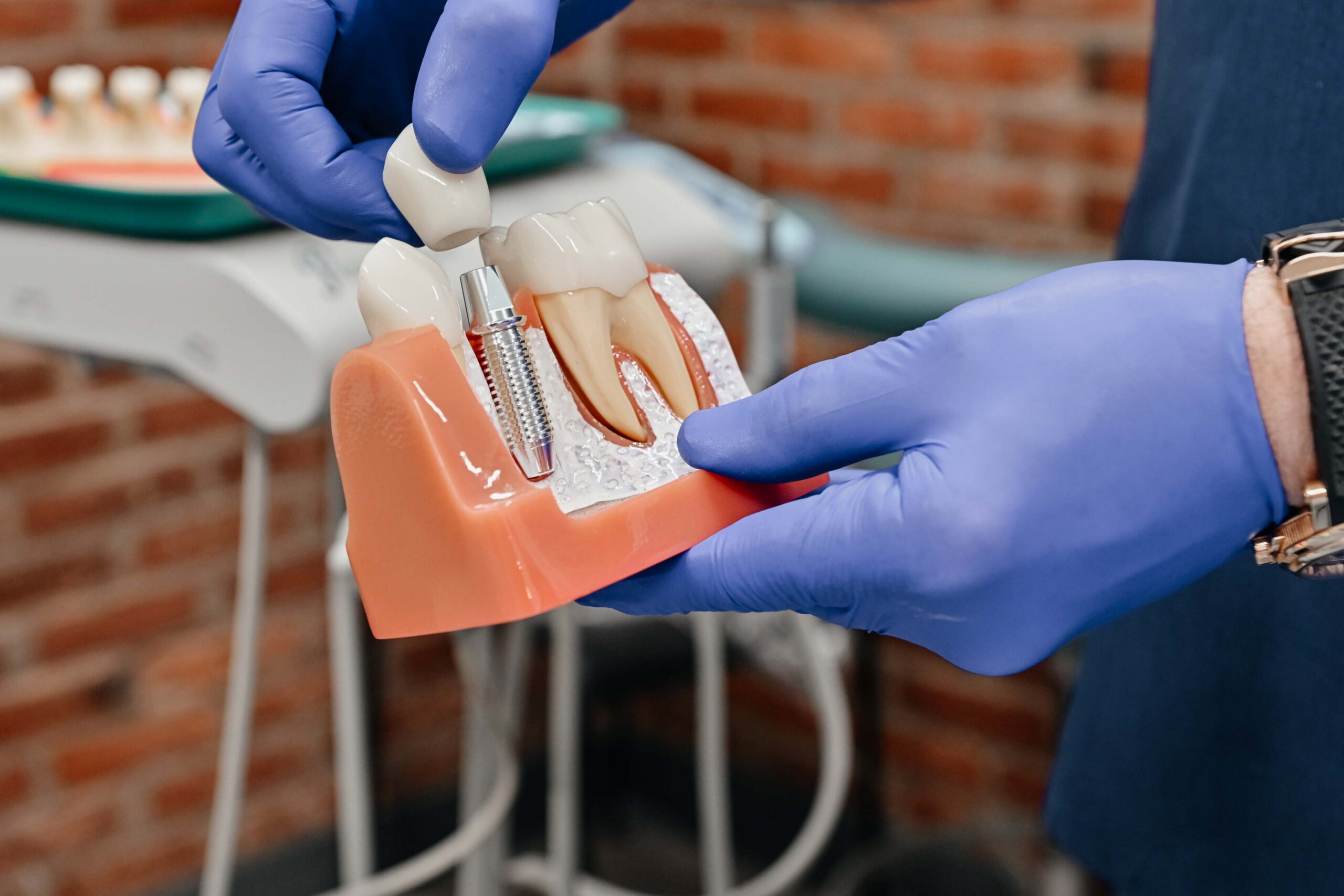
Invisalign with dental implants requires a different approach because implants do not move like natural teeth.
A natural tooth is connected to the surrounding bone through the periodontal ligament, allowing controlled orthodontic forces to gradually change its position.
A dental implant, however, is designed to integrate directly with the jawbone. An article published in Head & Face Medicine explains that an osseointegrated dental implant cannot be moved using orthodontic forces alone. This means an existing implant generally remains fixed while Invisalign treatment is planned around it.
That doesn't necessarily mean Invisalign is impossible. Instead, the implant's position must be incorporated into the treatment plan while movable natural teeth are repositioned around it.
Imagine you have an implant replacing a missing tooth while nearby natural teeth have become crowded or shifted. The implant generally stays in place, while Invisalign may be used to move selected natural teeth. Whether this can achieve the desired alignment and bite depends partly on the location of the implant and the movements required.
For patients who need an implant but haven't received it yet, treatment sequencing can be especially important. Orthodontic treatment may sometimes be performed first to create or preserve appropriate space for the future restoration. According to the American Association of Orthodontists (AAO), complex restorations such as crowns, bridges, and implants may be best completed after the remaining teeth are properly aligned and the bite is corrected.
Invisalign treatment works by gradually moving your teeth into planned positions. Each set of aligners makes small adjustments as you progress through treatment.
If you already have crowns, veneers, or implants, these restorations need to be considered when planning those movements:
That's why Invisalign treatment is personalized. Two people with similar alignment concerns may need very different treatment plans depending on their existing dental work.
A comprehensive dental evaluation is particularly important if you already have significant restorative work.
Your dentist may evaluate your:
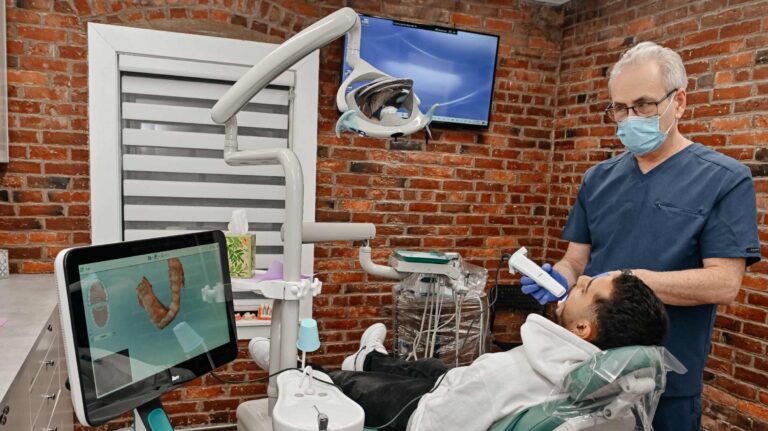
Digital scans, photographs, X-rays, or other diagnostic records may also be used when appropriate to understand tooth position and plan treatment.
Accurate diagnosis matters because clear aligners aren't appropriate for every orthodontic situation. The AAO recommends individualized treatment planning based on each patient's needs rather than assuming one orthodontic appliance is right for everyone.
Having a crown or veneer doesn't necessarily mean Invisalign will damage it.
However, existing restorations should be examined before treatment. An older, loose, damaged, or otherwise compromised restoration may need attention before orthodontic forces are applied.
You should also tell your dentist if you notice:
Addressing dental problems before beginning Invisalign can help create a healthier foundation for orthodontic treatment.
Sometimes restorative work may need to be reassessed after orthodontic treatment.
For example, a crown or veneer originally designed for a tooth's previous position may not provide the ideal shape or cosmetic proportions once alignment has changed. In other cases, an existing restoration may continue to function and look appropriate without replacement.
This is another reason treatment sequencing matters.
If you know you want Invisalign plus cosmetic dentistry, tell your dentist about your complete smile goals from the beginning. Planning orthodontic and restorative care together can help create a more coordinated final result.
The presence of crowns, veneers, or implants alone doesn't answer whether Invisalign is right for you.
Your candidacy depends on factors such as:
Clear aligners can treat many orthodontic concerns, including crowding, spacing, overbite, underbite, open bite, and crossbite, but the AAO emphasizes that they aren't appropriate for every patient.
Yes, teeth with crowns can often be moved orthodontically. Your dentist will evaluate the crown, underlying tooth, gums, bite, and required movements before creating your Invisalign treatment plan.
No. A dental implant is integrated with the jawbone and generally cannot be moved with conventional orthodontic forces. Invisalign treatment may still be possible by moving natural teeth around the fixed implant.
Potentially, yes. Veneered teeth still have natural roots and may be moved, but your dentist must consider the condition of the veneers, planned tooth movements, attachment placement, and final cosmetic result.
It depends on your treatment needs. In some cases, aligning the teeth first can provide a better foundation for future crowns, veneers, or implants. If restorative treatment is already planned, discuss both your orthodontic and cosmetic goals before beginning treatment.
Not necessarily. Some crowns continue to fit, function, and look appropriate after Invisalign treatment, while others may need to be reassessed depending on changes in tooth position, bite, or cosmetic goals.
Already have crowns, veneers, or dental implants? You may still be a candidate for Invisalign. The key is having a treatment plan designed around your existing dental work, bite, and smile goals.
At A Plus Dentistry in Brookline, MA, our team will evaluate your teeth and restorations, explain what can realistically be achieved, and create a personalized Invisalign treatment plan when appropriate.
📞 Call (617) 264-9200
📍 320 Washington Street, Brookline, MA 02445
Ready to take the next step toward a straighter smile? Schedule your Invisalign consultation with A Plus Dentistry today.
If you have any comments and or suggestions relating to improving the accessibility of our website, please don’t hesitate to contact us. Your feedback will help us make improvements.
Plan your visit today! Check out our office hours below